
Brisbane household appliance repairs

Clothes Dryer Repairs Brisbane

Brisbane clothes dryer repair enquiries should identify whether the unit is vented, condenser or heat-pump, and whether it tumbles, heats, stops early or shows an error. Stop using it if there is a burning smell, smoke or repeated power tripping.

Supporting service visual
Rear appliance service panel removed to expose internal components
Real appliance detail
Appliance motor and capacitor assembly exposed for assessment
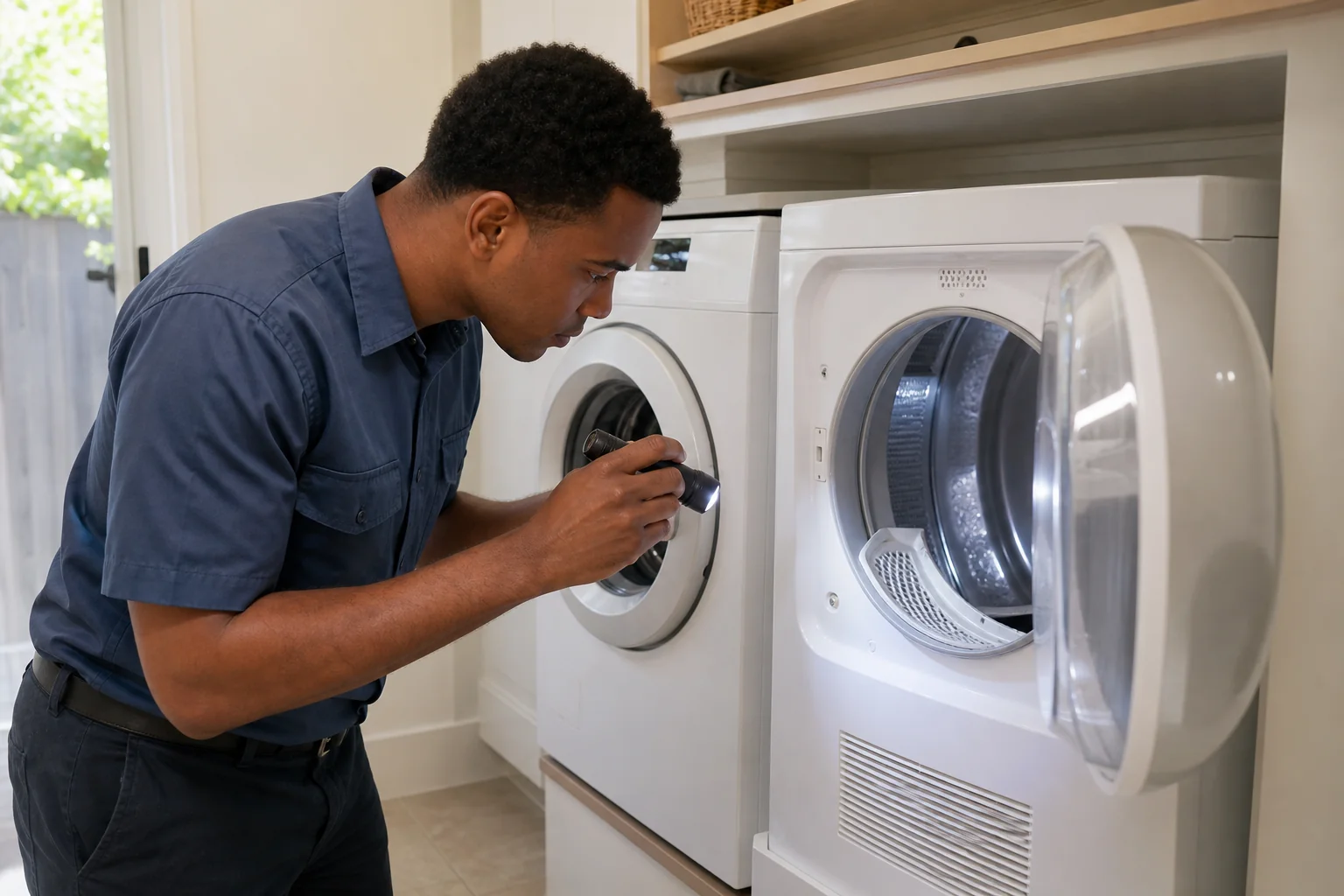
Supporting visual of a technician documenting appliance components safely

A useful first assessment

Start with the symptom, then establish the service path.

A dryer that tumbles without heat, takes too long or stops can involve airflow, lint restriction, sensing, heating, motors, pumps or controls. Dryer type and ventilation conditions materially change the assessment.

A photo can show the appliance, model and visible context. Testing, access, parts availability and any regulated work still shape the confirmed scope.

Compare common symptoms

Symptom before assumption

Visible changes come before a hidden-part claim.

Current cover documented

Liability and Queensland WorkCover evidence are held on file.

Scope clarified

Assessment, access and regulated work are separated clearly.

Brisbane context checked

Suburb, property access and service fit are confirmed from the enquiry.

Common issues to describe

What changed when the appliance stopped working normally?

Use the closest visible symptom as the starting point. It helps organise the assessment; it does not confirm the cause.

01

The drum turns but clothes remain cold or damp

02

The dryer will not start, stops early or shows an error

03

A new scraping, thumping or squealing noise appears

04

The cabinet overheats, smells hot or airflow is weak

05

Water remains in a condenser drawer or the lint warning persists

Brand and model identification

Bring the exact brand and model into the conversation.

These familiar brand marks are identification examples only. They do not state manufacturer authorisation, parts stock or confirmed model coverage.

  • AEG brand mark
  • ASKO brand mark
  • Beko brand mark
  • Bosch brand mark
  • Electrolux brand mark
  • Fisher & Paykel brand mark
  • Haier brand mark
  • Hisense brand mark

From symptom to scope

Separate possible factors from the confirmed repair decision.

The service path is built from what could be involved, what needs testing, what affects access and what the available choices mean.

Assessment inputs

Model, visible symptom, timing and safe access shape the next useful question.

Possible factors

  • Blocked lint path or restricted ventilation
  • Heating, sensor or thermal protection fault
  • Motor, belt, bearing or drum condition
  • Pump, control-board or wiring issue

Assessment inputs

  • Brisbane suburb or postcode
  • Appliance type, brand and model number if safely accessible
  • Error code, noise, leak or performance symptom
  • When the fault started and whether it is intermittent
  • Clear photographs of the appliance and display

Service choices

  • No-heat and long-drying assessment
  • Tumble, motor and unusual-noise review
  • Condenser, heat-pump and drain context
  • Sensor, control and error-code checks

Quote and scope factors

  • Dryer technology and stacking access
  • Airflow, heating or condensate fault path
  • Drum, belt, motor or electronic components
  • Disassembly and parts availability
  • Do not continue using a dryer that smells hot or smoky
  • User cleaning is limited to manual-approved filters and accessible areas

Assessment bridge

Discuss a clothes dryer fault

Send the details

A connected repair enquiry process

From visible condition to an agreed next step.

  1. 01

    Record whether the dryer starts, turns, heats and moves air normally

  2. 02

    Check the user-accessible lint filter and note any displayed code or new noise

  3. 03

    Assess airflow, drive, heating, sensors and installation conditions as relevant

  4. 04

    Confirm the tested fault, ventilation needs and parts path before scope is agreed

Prepare before the visit

  • Stop use for burning smell, overheating, sparking or unusual drum movement
  • Clean only the user-accessible lint filter described in the manual
  • Leave stacked or wall-mounted units in place and describe the access
  • Note load type, cycle time and whether clothes remain cold, damp or unusually hot

Keep the enquiry safe

Stop using the appliance if it sparks, smells hot, leaks near electrical parts or repeatedly trips power. Do not remove covers or touch exposed wiring; call 000 for smoke, fire or immediate danger.

Appliance work that is regulated electrical, gas, plumbing or refrigeration work must follow the appropriately licensed trade pathway once the fault and scope are known.

Safe photo context

Photograph only what is visible without moving or opening the appliance.

See the appliance photo library

Show the whole appliance

Include the installation and surrounding access.

Record the display

Capture the exact code without opening a panel.

Describe timing

Explain when the visible condition or sound occurs.

Questions before scope

Clothes Dryer Repairs FAQs

Match the visible appliance context to the questions that help define a safe next step.

Internal appliance wiring and control components during service access
Real appliance detail
Supporting visual of apartment access details being confirmed before an appliance visit
Supporting visual of a technician reviewing appliance service details in a Brisbane home
Why does the dryer tumble but not heat?

Heating components, sensors, thermal protection, airflow, controls or supply can be involved. Stop using it if there is overheating, a burning smell or tripping.

Why are clothes taking longer to dry?

Lint restriction, ventilation, load size, moisture sensing, heating performance and condenser cleanliness can all affect drying time.

Can I clean inside the dryer myself?

Clean only filters and areas the manufacturer identifies for users, with the appliance isolated. Internal panels, wiring and heater areas should not be opened by the customer.

What causes a dryer to stop mid-cycle?

Overheating protection, airflow, door sensing, moisture sensing, motor, pump or control faults may stop a cycle. Note the time, heat and displayed code.

What should I include in a dryer enquiry?

Provide dryer type, brand, model, whether it tumbles and heats, cycle duration, error code, lint or water observations and installation photos.

Talk through the appliance details

Ready to speak with Ellis Services?

Use the channel that suits you. Include the appliance, visible symptom and Brisbane suburb so the conversation starts in the right place.

Call 0413 477 667

Phone

0413 477 667

Email

maxine77o3o@gmail.com

Contact hours

Monday to Saturday, 9:00 am to 9:00 pm

Contact address

1 Eagle Street, Brisbane City QLD 4000, Australia

Contact address only — no walk-in appliance repair or drop-off access is stated. Please call or email before considering a visit.

Appliance repair enquiry

Clothes Dryer Repairs enquiry

Do not use this form for immediate danger, smoke or fire. Call 000.

Prefer to speak first? Call 0413 477 667. The form reports success only after the delivery service accepts the enquiry.

Ready to discuss clothes dryer repairs?

Call with the model and symptom, or return to the enquiry form.

Call 0413 477 667