
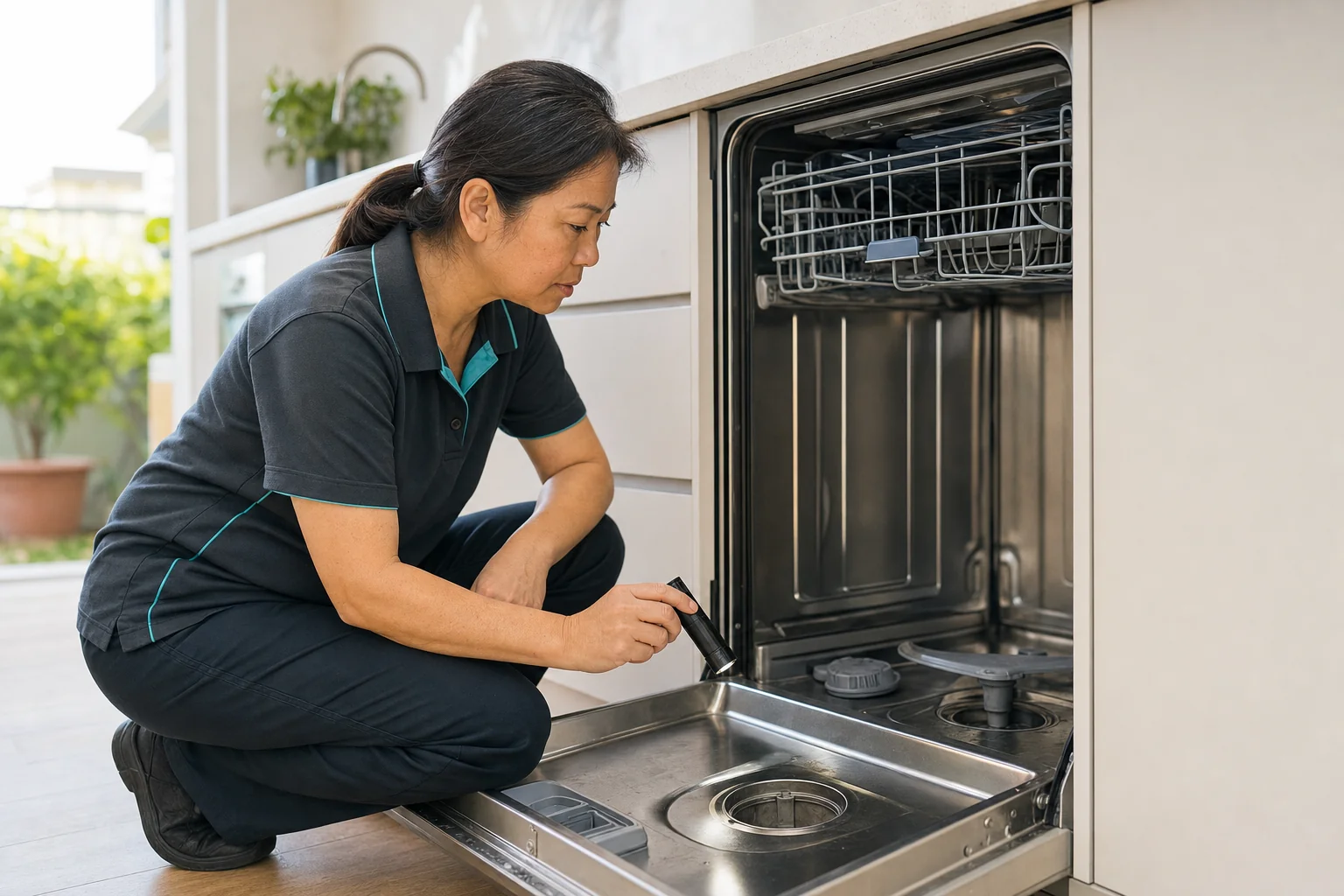
Describe the problem
You do not need to know which part has failed.
Dishwasher not draining, cleaning properly or finishing a cycle? Tell us the brand, model and any error code. Stop using it if water is leaking near power, cabinetry or flooring.
Poor cleaning, standing water and leaks can come from different parts of the fill, circulation, heating and drain sequence. The filter and spray area may be safely visible, but pumps, heaters, wiring and concealed hoses need an appropriate assessment.
A photo can help us understand the problem, but the appliance may need testing before the repair and price can be confirmed.
See common problemsYou do not need to know which part has failed.
Any electrical, gas, plumbing or refrigeration work requires the appropriately licensed trade.
Checks, access and repair requirements are discussed before work is agreed.
Tell us your suburb and any building or appliance access restrictions.
Tell us which of these sounds familiar and when it happens. Similar symptoms can have different causes.
These logos are for identification only, not a claim of manufacturer authorisation. Support for your model and parts availability must be checked.


The cause needs to be checked before choosing parts or agreeing to a repair. Your model and the way the problem occurs help with that assessment.
Details to have ready
Have the model and error code ready. Tell us when the problem started and whether the appliance is difficult to reach.
Record whether the issue appears during fill, wash, heat or drain
Review the displayed code, filter area and visible water location without removing panels
Assess circulation, drainage, heating, door and installation access as relevant
Discuss the fault, replacement parts and any cabinetry work before agreeing to a repair
Stop using the appliance if it sparks, smells hot, leaks near electrical parts or repeatedly trips power. Do not remove covers or touch exposed wiring; call 000 for smoke, fire or immediate danger.
Electrical, gas, plumbing and refrigeration work must be carried out by an appropriately licensed person. The trade required depends on the fault and the work involved.
Show the space around it without moving the appliance.
Capture the exact code without opening a panel.
Tell us which cycle or function is affected.
Answers to common questions about faults, safe use and preparing for an assessment.
A blocked user filter or kinked drain hose can contribute, but drain-pump, sensor, wiring and connection faults can look similar. Do not reach into the sump while the unit is connected to power.
Loading, blocked spray paths, low water flow, circulation, heating and detergent conditions can all matter. Note whether the water heats and whether the spray arms move freely when the machine is off.
It is safer to stop using it until the source is understood, especially when water can reach cabinetry, flooring, plugs or concealed electrical parts.
Photograph the whole installation, display code, water location and the model label only if it is safely accessible without moving the unit.
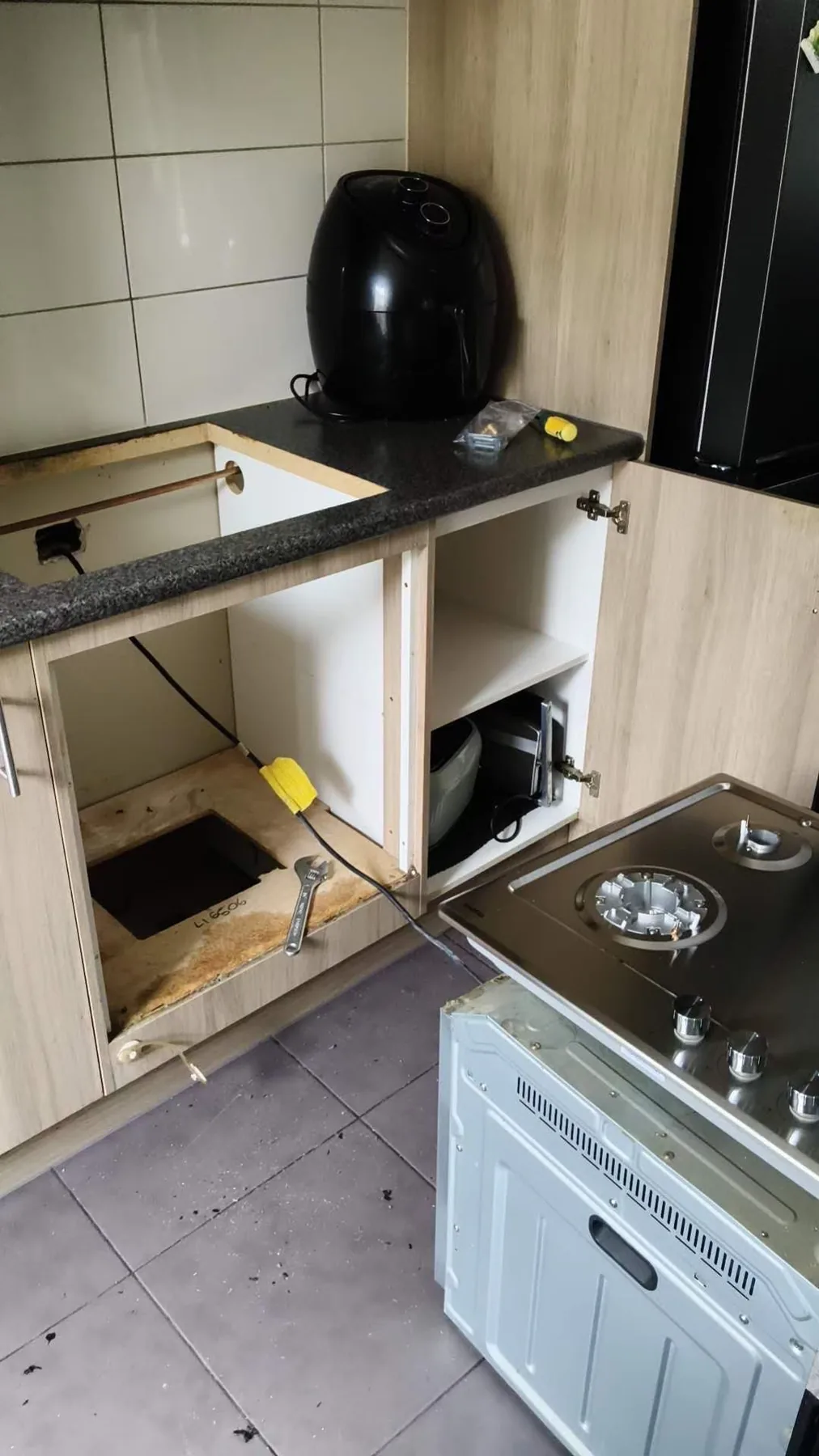
Cabinet panels and restricted access can add steps. Share a wide photo of the installation so access can be considered before a booking is discussed.
Washing machine not draining, spinning or finishing a cycle? Check common problems and what to have ready before contacting us.
View this serviceOven not heating or cooking unevenly? Check heating, fan, door and control problems.
View this serviceBurner not lighting or cooktop not heating? Find help with gas, electric and induction cooktop problems.
View this service